GTM engineer and AI-native recruitment

Thirteen seats sit under AI-native GTM, from the GTM engineer who builds the workflows that turn data into pipeline to the architects who design the system beneath them. We split them by the part each one owns, screen with a working build on a sample account list, and charge a flat 15% only once your hire starts.

Practice
AI-Native GTM
Reports into
RevOps, growth, the CRO or the CMO
Seniority
Analyst to Architect
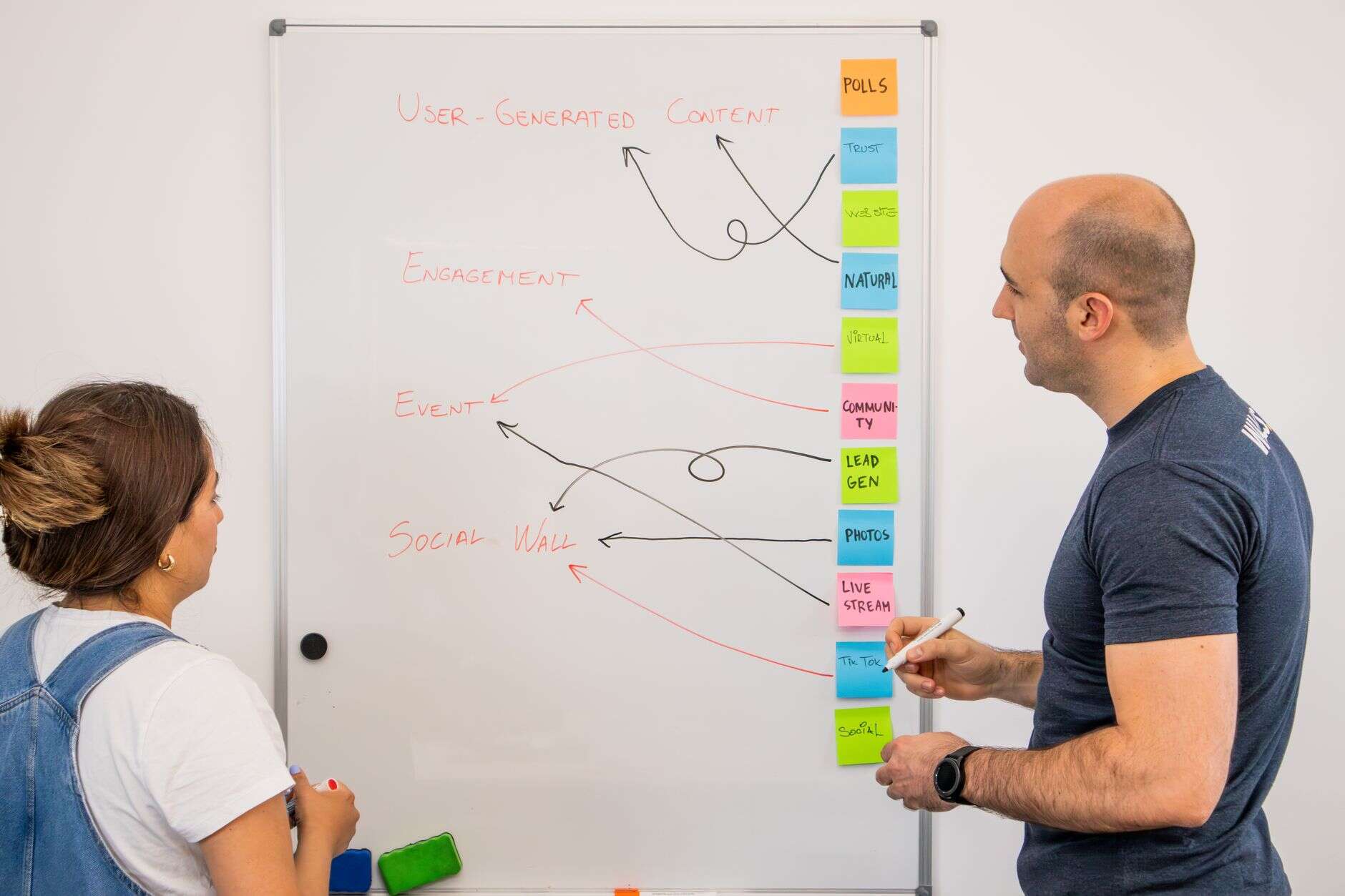
Two colleagues mapping a workflow on a whiteboard
  • 13seats in this function, each briefed on its own terms
  • 15%of first-year base, paid only once your hire starts
  • 10working days from a signed brief to your shortlist
  • $0upfront: no retainer, no exclusivity, no monthly minimum

Thirteen seats, and which one you are filling

Every seat here is a go-to-market operator who builds with AI, not a machine learning engineer or researcher. The titles are new and used loosely, so we start with the number the seat should move and the systems it will touch, then the title.

Stage 1 of 6: Data to pipeline

Moves: pipeline sourced by automated workflows

2 seats

  • AI GTM Engineer

    Often titled simply GTM engineer: workflows that turn data into pipeline, from enrichment, signals and scoring to routing, sequencing and CRM writes, in Clay, n8n, Make or code.

    Brief us when reps build lists and research accounts by hand while buying signals sit unworked.

  • Growth Systems Engineer

    The data plumbing for product-led growth: event tracking, product usage synced to the CRM, lifecycle triggers and the experiment setup that shows what moved conversion.

    Brief us when product usage could flag accounts ready to buy, but the data never reaches sales.

Stage 2 of 6: Ground the AI

Moves: answer accuracy and on-brand output

2 seats

  • AI Knowledge Base Manager

    The knowledge your AI tools answer from: product facts, messaging, pricing rules, objection handling and proof points, kept current, structured and permissioned by audience.

    Brief us when sales assistants, chatbots or agents give confident answers that are out of date.

  • AI Content Architect

    The structure that lets AI produce content you can publish: content models, reusable blocks, voice and claims rules, and the approved sources every draft must draw on.

    Brief us when AI drafts read generic or off-brand, and every piece needs a rewrite before it ships.

Stage 3 of 6: Agents in production

Moves: task success rate and output quality at volume

2 seats

  • AI Workflow Engineer

    The AI steps inside GTM workflows: prompt chains, structured outputs, evaluations, fallbacks and logging, so an account summary or email draft holds up at volume.

    Brief us when AI steps that worked in testing drift in production, and nobody can say why the output changed.

  • Agentic Workflow Designer

    Agents that act across your GTM systems: what each may do alone, which tools and records it can touch, where a person approves, and what it logs.

    Brief us when you want agents researching, drafting or updating records, and nobody has set their limits.

Stage 4 of 6: Reach the buyer

Moves: reply and conversion lift over a control

2 seats

  • AI Campaign Manager

    Campaigns where AI builds the audiences, variants and copy: the plan, the tests, human review before launch, and reporting on pipeline rather than output volume.

    Brief us when your campaigns test one idea a quarter because every variant is built by hand.

  • AI Personalization Manager

    Account and segment personalization across email, ads and web: the data behind it, what each message may reference, and checks that stop a wrong detail reaching a buyer.

    Brief us when personalization stops at a first name, or AI-written lines reach buyers with wrong facts.

Stage 5 of 6: Measure and run

Moves: return on AI spend and adoption by teams

2 seats

  • AI Performance Analyst

    Measuring AI in the funnel: output quality, cost per run, pipeline from AI workflows against a control group, and which prompts, models and tools earn their spend.

    Brief us when AI spend keeps climbing and nobody can show which workflows pay for themselves.

  • AI Marketing Operations Manager

    Marketing operations with AI in the loop: the automation platform, lead lifecycle and data, plus which AI tools marketers use, how they connect and who reviews the output.

    Brief us when marketers adopt AI tools one at a time, and nobody owns how they connect to the stack.

Stage 6 of 6: Own the architecture

Moves: data consistency and the cost of each new tool

3 seats

  • Revenue Systems Architect

    The revenue system's design: CRM data model, system of record, integrations and identity, so every tool, workflow and agent reads and writes the same records.

    Brief us when each new tool adds another copy of the customer, and no two systems agree on an account.

  • Marketing Systems Architect

    The marketing stack's architecture: automation platform, CDP or warehouse, consent, identity and the integration standards that let AI act on marketing data safely.

    Brief us when AI projects stall because marketing data sits in several tools under different definitions.

  • GTM Automation Architect

    How GTM workflows fit together: which platform runs each step from signal to sequence, CRM write rules, sending limits, API budgets and alerts when a flow breaks.

    Brief us when GTM workflows live in several tools, and failures surface as missed leads or burned domains.

Measured on

  • Workflow-sourced pipeline
  • Enrichment match rate
  • Signal to first touch
  • Cost per enriched account
  • CRM write accuracy
  • Reply rate lift
  • Agent task success rate
  • Answer accuracy
  • Human edit rate
  • Model and API spend
  • Test velocity
  • Rep hours returned

Every GTM engineer has a workflow to show. Few can show the pipeline it produced.

Interviews for these seats reward fluent talk about tools and models, and fluency is cheap. We screen with work on your accounts and your stack, and check past work with the people who relied on it.

  1. A workflow traced to pipeline

    Candidates walk us through one workflow they built, live in the tool, and the meetings or pipeline it produced. We check the number with the sales or RevOps leader who relied on it. Volume sent without meetings held is where we dig.

  2. A working enrichment-to-CRM build

    Each GTM engineer candidate builds a small workflow on a sample account list: enrich, score, route and write clean records to a test CRM, in Clay, n8n, Make or code. We score the edge cases, not the happy path.

  3. A prompt chain's failure cases

    We hand candidates a prompt chain that researches accounts and drafts first lines, with a batch of its outputs, and ask which would embarrass you in front of a buyer, why each failed and what they would change.

  4. Limits on an agent

    We give candidates an agent with CRM and email access and ask them to set its limits: what it may do alone, what needs approval and what it logs. Then we ask which step in their last build they kept manual, and why.

Not sure which seat you need? Tell us what you want automated and the data it runs on, and we will tell you which of the thirteen owns it, or that one GTM engineer covers it for now.

What emerging AI-native GTM seats pay in the US

Public US benchmarks, read October 2026. Neither Built In nor Salary.com publishes a GTM engineer benchmark, so each row is a labeled neighboring seat, and pay in those seats is mostly base salary. Sources conflict on AI engineers: Built In’s self-reported median base is $180,000, above the Salary.com band shown.

Each bar runs from the 25th to the 75th percentile, the middle half of reported pay.

Base salaryMedian base salaryAverage total pay, base plus variable

  • Marketing Operations Manager

    Salary.com base, Built In total, neighboring seat

    $112,100 to $135,400 base$115,990 average total

  • Revenue Operations Manager

    Salary.com base benchmark, neighboring seat

    $111,657 to $134,417 base

  • Automation Engineer

    Built In, self-reported, neighboring seat

    $107,000 median base$119,141 average total

  • AI Engineer

    Salary.com base benchmark, neighboring seat

    $107,833 to $125,338 base

Marketing Operations Manager, Revenue Operations Manager and AI Engineer: Salary.com base salary, 25th to 75th percentile, United States, as of October 1, 2026. Marketing Operations Manager ring and Automation Engineer: Built In median base salary and average total compensation, self-reported, reviewed October 5 and 7, 2026; Built In’s automation engineer title is not specific to go-to-market work. AI engineer figure in the lead: Built In median base salary, self-reported, reviewed October 6, 2026. Public aggregates, not ZaphyrRecruit placement data.

Ten working days, brief to shortlist

The clock starts when the brief is signed and stops when three to five calibrated candidates are in front of you. Most of that time is spent talking to people, not searching for them.

  1. Day 1

    Calibration call

    Forty-five minutes with whoever the hire reports to. We leave with the number the seat owns, the range you can pay and the two or three things that genuinely disqualify.

  2. Days 2 to 7

    Search and screen

    We build the list from people doing the job now, approach them directly and screen every name against the brief before it reaches you.

  3. Days 8 to 10

    Shortlist with evidence

    Three to five people, each with a page: what they have run, why they fit this seat, pay expectations, notice period and where they are weak.

  4. After the shortlist

    Interviews, offer, start

    Interviews run at your pace. We handle scheduling, references and the counter-offer conversation, and nothing is payable until your hire starts.

What clients have written to us

Three clients, quoted as they wrote to us about searches we ran for them. We publish no names or logos without permission.

Questions employers ask before briefing a GTM engineer search

A GTM engineer, short for go-to-market engineer, builds the automated workflows that turn data into pipeline. The seat owns enrichment, buying signals, scoring, routing, sequencing and the writes back to your CRM, built in Clay, n8n or Make, or in code against APIs. It differs from RevOps in what it is judged on: RevOps keeps the system of record and its definitions correct, while a GTM engineer builds on that system and is measured on the pipeline the workflows produce.

A RevOps or marketing operations hire keeps your systems of record accurate; a GTM engineer builds the workflows that produce pipeline from them. RevOps owns CRM configuration, definitions, forecasting and reporting, and marketing operations owns the automation platform and lead lifecycle. The GTM engineer finds, enriches and reaches accounts, and is measured on meetings and pipeline. If your CRM data is unreliable, hire ops first: automation spreads bad data faster than people do.

Both: some are new seats and some are ops roles with AI added to the title, and the label alone will not tell you which. A GTM engineer or an agentic workflow designer does genuinely new work; an AI marketing operations manager is often a marketing ops seat with new tools. So we brief on the work and the systems the seat will touch, not the label, and search past the title, because people already doing the work may hold an older one.

When reps spend hours each week building lists and researching accounts, buying signals go unworked, and your CRM is clean enough to write to. Hire a builder first, not an architect: one GTM engineer shipping two or three workflows with your sales leader shows quickly where the value is. Add an architect once several builders, tools or agents need one design, and an analyst once AI spend needs defending.

A flat 15% of the hire’s first-year base salary, payable only once they start. On a $120,000 base that is $18,000. Bonus and equity are not part of the calculation, and the same 15% applies to every seat on this page. There is no retainer, no exclusivity and nothing to pay if the search does not produce a hire. If a placement leaves inside the guarantee period, we rerun the search at no further fee.

Neither Salary.com nor Built In publishes a GTM engineer benchmark yet, so we read the neighboring seats. Salary.com puts marketing operations managers at $112,100 to $135,400 base and revenue operations managers at $111,657 to $134,417 (October 2026). Built In reports a $107,000 median base for automation engineers, and Salary.com puts AI engineers at $107,833 to $125,338, where Built In’s self-reported median is $180,000. The systems a hire will own move the number.

Ten working days from a signed brief to a shortlist of three to five calibrated candidates. The screen runs inside those ten days, so every name you see has already built a working enrichment-to-CRM workflow on a sample account list and reviewed a prompt chain’s failure cases. Interviews and the offer then run at your pace; strong candidates usually have other processes running, so a quick decision keeps them.

Yes. A GTM engineer, a RevOps or marketing operations manager and an AI performance analyst hired as one structure is how we run a pod, briefed together so each search builds on the last instead of restarting. The same 15% applies to each hire, payable as each one starts. Start with the builder, so the later seats are scoped around what that person ships.

Brief us on an AI-native seat

Tell us what you want built, what data and tools you have, and who the seat reports to. We reply within one business day with which of the thirteen seats it is and what it pays.


If you are a GTM engineer or AI-native operator reading this

We build shortlists from people doing this work now, often before a seat is advertised. Set up a job alert for AI and operations roles, or send your CV and we will come to you when a seat opens.

Scroll to Top