Sales and GTM enablement recruitment

Seven seats sit under go-to-market enablement, from the trainer who gets new hires to their first deal to the enablement leader who keeps sales, success and partners running one motion. We split them by the stage of a rep’s ramp each one owns, screen for ramp time and win rates they moved, and charge a flat 15% only once your hire starts.

Practice
Revenue Leadership
Reports into
Head of Enablement, CRO or VP Sales
Seniority
Specialist to Head of Enablement
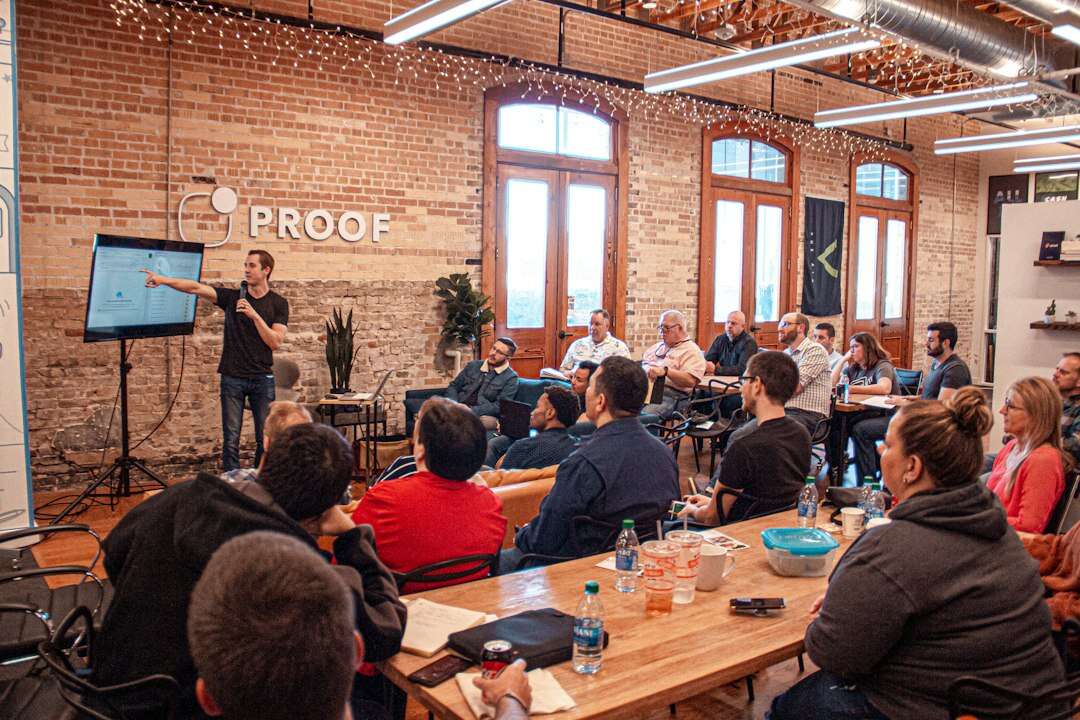
Enablement lead presenting a training session to a sales team
  • 7seats in this function, each briefed on its own terms
  • 15%of first-year base, paid only once your hire starts
  • 10working days from a signed brief to your shortlist
  • $0upfront: no retainer, no exclusivity, no monthly minimum

Seven seats, and which one you are filling

Most enablement briefs ask for a sales enablement manager and describe an onboarding problem, a content problem or a coaching problem. We start with where reps lose time on the way to quota.

From new hire to quota, and the seat that owns each stage

Stage 1 of 5: Onboard

Moves: ramp time and time to first deal

1 seat

  • Training Manager

    Onboarding and ongoing training: curriculum, sessions, certification and the schedule that gets every new hire productive.

    Brief us when onboarding is a week of shadowing and slides, and every new hire learns differently.

Stage 2 of 5: Equip

Moves: content found and used in live deals

2 seats

  • Knowledge Management Specialist

    Where answers live: the content library, internal wiki and search, kept current so reps find the right material in seconds.

    Brief us when reps ask in chat for the latest deck, and three versions of it are in circulation.

  • Playbook Manager

    The sales playbook: stages, plays, talk tracks and objection handling, written from what your strongest sellers actually do and updated as the market moves.

    Brief us when each rep sells in their own way and nobody can say which way wins.

Stage 3 of 5: Coach

Moves: win rate and quota attainment

1 seat

  • Sales Enablement Manager

    Making sellers more effective: onboarding, coaching programs, call reviews and the content and tools reps use in deals, measured on win rate and ramp.

    Brief us when new reps take too long to close, or your strongest sellers win in ways nobody else copies.

Stage 4 of 5: Align the GTM team

Moves: one motion across sales, success and partners

2 seats

  • Revenue Enablement Manager

    Enablement across every revenue team: sales, customer success, account management and support, run as one program.

    Brief us when sales is enabled and the teams that renew and expand customers are not.

  • GTM Enablement Manager

    Launch readiness and the go-to-market motion: getting sales, success and partners ready for new products, segments and pricing.

    Brief us when launches land on sales with a deck and a recording, and adoption stalls.

Stage 5 of 5: Grow people

Moves: promotion rate and rep retention

1 seat

  • Learning & Development Manager

    Career growth for the revenue team: skills frameworks, management training and the paths that turn reps into leaders.

    Brief us when good reps leave because they see no path, or new managers are promoted with no training.

Measured on

  • Ramp time
  • Time to first deal
  • Quota attainment
  • Win rate
  • Content used in deals
  • Certification completion
  • Rep retention
  • Average deal size
  • Sales cycle length
  • Playbook adoption
  • Coaching coverage
  • Promotion rate

Every enablement candidate has run a training. Few can show the ramp time it changed.

Enablement candidates present well, because presenting is the job. We screen for what the business pays for: ramp time and win rates they moved, programs reps used after the session ended, and the credibility to coach sellers who already think they know how.

  1. Ramp and win rate, before and after

    We ask for one program and the numbers on either side of it: ramp time, win rate or attainment. Completion rates on their own are where we dig.

  2. A teach-back

    Candidates teach us one part of a sales motion in ten minutes, and we judge whether a rep could use it on a call the same day.

  3. Credibility with sellers

    We ask how they earned the trust of senior reps who did not want training, and check with a sales leader who worked with them.

  4. Content that gets used

    We ask how they know which content reps use in deals, and what they retired when usage told them to.

Not sure which seat you need? Tell us how long ramp takes, where deals stall and which teams need enabling, and we will tell you which of the seven owns it.

What enablement seats pay in the US

Public US benchmarks, read October 2026. Enablement pay is mostly base, sometimes with a bonus tied to ramp or attainment. The BLS rows cover training roles in every function, not only sales, so read them as a frame around the sales-specific band.

Each bar runs from the 25th to the 75th percentile, the middle half of reported pay.

Base salaryWages including commission (BLS)

  • Sales Enablement Manager

    Salary.com base benchmark

    $111,500 to $130,214 base

  • Training and development managers

    BLS, all industries

    $101,850 to $176,870

  • Training and development specialists

    BLS, all industries

    $50,110 to $95,050

Sales Enablement Manager: Salary.com base salary, 25th to 75th percentile, United States, as of October 1, 2026; Salary.com defines the role as managing an enablement team. Training and development managers and specialists: U.S. Bureau of Labor Statistics, Occupational Employment and Wage Statistics, May 2025, annual wage at the 25th and 75th percentiles (SOC 11-3131 and 13-1151), all industries. Public aggregates, not ZaphyrRecruit placement data.

Ten working days, brief to shortlist

The clock starts when the brief is signed and stops when three to five calibrated candidates are in front of you. Most of that time is spent talking to people, not searching for them.

  1. Day 1

    Calibration call

    Forty-five minutes with whoever the hire reports to. We leave with the number the seat owns, the range you can pay and the two or three things that genuinely disqualify.

  2. Days 2 to 7

    Search and screen

    We build the list from people doing the job now, approach them directly and screen every name against the brief before it reaches you.

  3. Days 8 to 10

    Shortlist with evidence

    Three to five people, each with a page: what they have run, why they fit this seat, pay expectations, notice period and where they are weak.

  4. After the shortlist

    Interviews, offer, start

    Interviews run at your pace. We handle scheduling, references and the counter-offer conversation, and nothing is payable until your hire starts.

What clients have written to us

Three clients, quoted as they wrote to us about searches we ran for them. We publish no names or logos without permission.

Questions employers ask before briefing an enablement search

Sales enablement makes sellers more effective; revenue enablement does the same for every team that touches revenue, including customer success, account management and support. The skills overlap. The scope does not: revenue enablement plans across teams with different metrics. Most companies start with sales enablement and widen the remit once retention and expansion matter as much as new logos.

A flat 15% of the hire’s first-year base salary, payable only once they start. On a $120,000 base that is $18,000, and the same 15% applies to every seat on this page. There is no retainer, no exclusivity and nothing to pay if the search does not produce a hire. If a placement leaves inside the guarantee period, we rerun the search at no further fee.

Salary.com puts sales enablement managers at $111,500 to $130,214 base (October 2026), for a role it defines as managing an enablement team. The BLS puts the middle half of training and development managers between $101,850 and $176,870 a year, and specialists between $50,110 and $95,050 (May 2025, all industries). Team size and scope move the number.

When you hire sellers faster than managers can train them. Common triggers are a sales team past eight to ten reps, ramp times that keep stretching, or a new product or segment the team has to learn quickly. Before that, a strong sales manager with a written playbook can carry onboarding.

Report it to the leader whose number it moves, which is usually the CRO or VP Sales. Enablement that reports into marketing tends to drift toward content; enablement inside RevOps tends to drift toward tools. Either can work if the goals are ramp time and win rate and the sales leader owns them.

We ask for one program with numbers on either side of it, a ten-minute teach-back and a reference from a sales leader who worked with them. That separates people who changed how reps sell from people who ran sessions. We also check how they measure whether reps use what they built, and what they retire when usage drops.

Yes. Revenue and GTM enablement seats cover customer success, account management and channel teams as well as sales. Brief us on which teams the hire will serve and how each is measured, and we screen for candidates who have enabled more than one kind of team. Enabling a renewal team is different from enabling new-logo sellers, so we ask for examples of both.

Brief us on an enablement seat

Tell us how many reps you have, how long ramp takes and where deals stall. We reply within one business day with which of the seven seats it is and what it pays.


If you work in enablement or training and are reading this

Most of our enablement searches are filled from people we already know, the week an employer briefs us. Set up a job alert for sales and operations roles, or send your CV and we will come to you when a seat opens.

Scroll to Top