A web designer decides how your site’s pages look and how visitors move through them: layout, hierarchy and the components developers build from. Beautiful mockups are common, so we screen for pages that shipped, pages that converted, and designs a developer could build without guessing.

Median base, Built In
$100,000
Reports to
Creative director
Ramp
Owns new pages by day 90
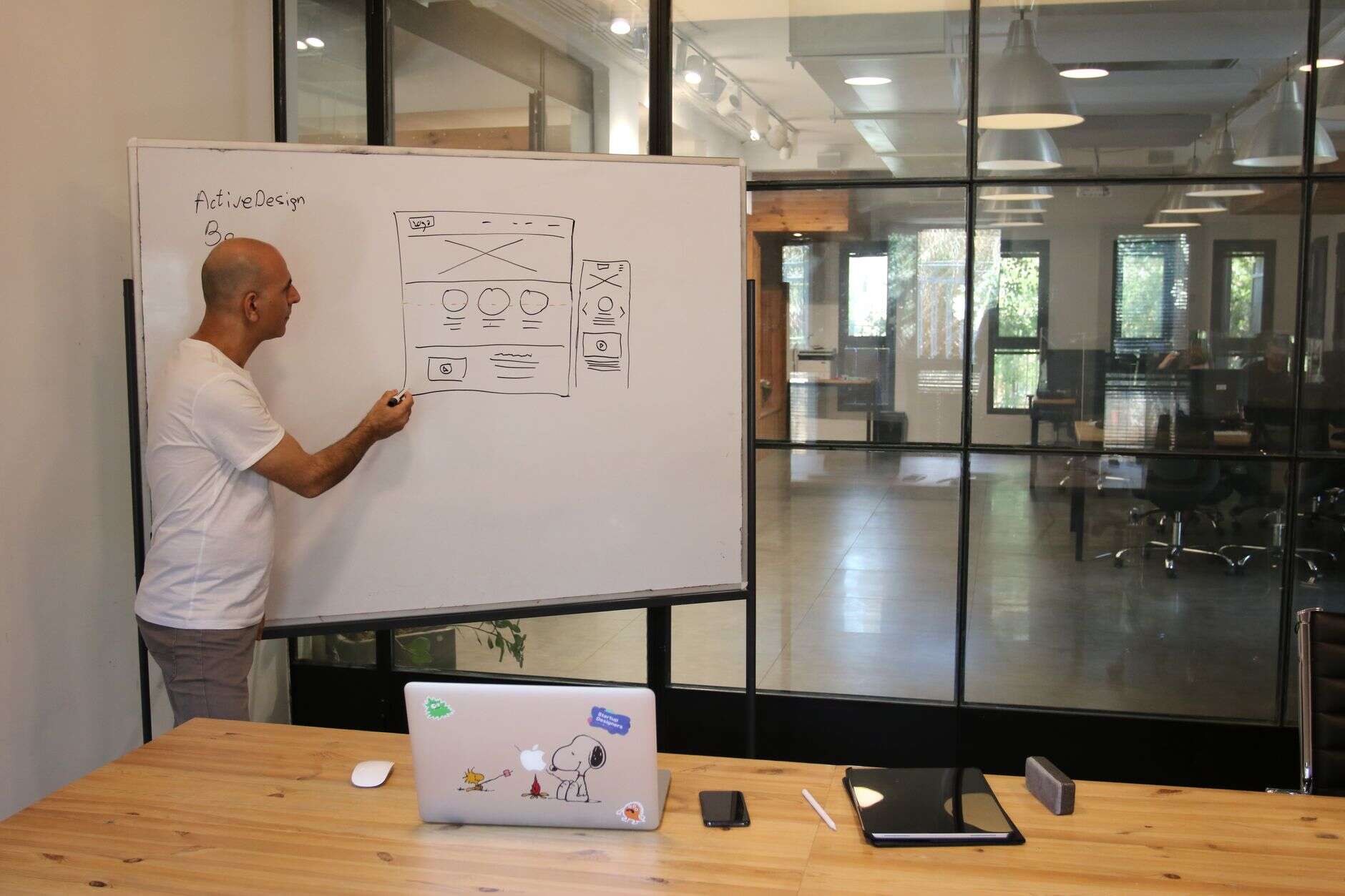
Web designer sketching a page wireframe on a whiteboard in a glass-walled office
  • 90days of ramp, each milestone tested before you meet a candidate
  • 15%of first-year base, paid only once your hire starts
  • 10working days from a signed brief to your shortlist
  • $0upfront: no retainer, no exclusivity, no monthly minimum

What a good web designer has done by day 90

A web designer’s value shows when pages ship and visitors act on them. Each stage below has a signal that predicts it, and we test for that signal before you meet anyone.

Milestone 1 of 5: Learns the site and the numbers

Weeks 1 to 3

The design system, the page builder or theme, analytics for the key pages, and the pages marketing most wants changed. Sits with sales and the website manager to learn what visitors need to find.

On track looks like a short list of the pages that matter most and what is wrong with each, backed by data.

How we test for it before you meet them

A page critique in our screen: one of your live pages, twenty minutes. We score what they notice about hierarchy, clarity and the path to the next step.

Milestone 2 of 5: First redesign shipped

Weeks 4 to 6

One high-value page, often a product or pricing page, redesigned, built with the developer and live, with the before and after numbers set up to compare.

On track looks like a redesigned page live within the first six weeks, built close to the design.

How we test for it before you meet them

We ask for a page they designed that shipped, with the design file beside the live page. The gap between the two tells us how they work with developers.

Milestone 3 of 5: Components, not one-off pages

Weeks 7 to 10

The sections that keep recurring, heroes, proof bars, pricing tables, forms, designed once as components so landing pages come together in days.

On track looks like a component set in the design file and in the build that marketers use to make new pages.

How we test for it before you meet them

We look for design system or component work in the portfolio and ask who built pages from it after they left.

Milestone 4 of 5: Pages that move a number

Weeks 11 to 13

Landing pages for a campaign or launch, designed against a goal: sign-ups, demo requests or time on page, with the results read back after launch.

On track looks like at least one page with a measured improvement the team can point to.

How we test for it before you meet them

A reference call about one page: the goal, the result, and how they responded when the first version underperformed.

Milestone 5 of 5: Owning the site's look and flow

After day 90

Strong web designers start shaping the next redesign, tightening the design system and working with the CRO lead on what to test next.

On track looks like a design roadmap for the site that the website manager supports.

How we test for it before you meet them

We ask what they would change first on your site and why. A specific, evidence-led answer beats a list of trends.

What the seat owns

Five responsibilities. If the seat is mainly product screens inside an app, it is a UI designer; if it is mainly building the pages, it is a developer.

  1. Page layouts and hierarchy

    How each page is structured so visitors find what they came for and see the next step.

  2. The site's design system

    Type, color, spacing and components applied consistently across the marketing site.

  3. Landing pages for campaigns

    Pages designed against a campaign goal, matched to the ad or email that sends visitors there.

  4. Designs developers can build

    Responsive designs with states, spacing and specs clear enough that the build matches the file.

  5. Pages measured after launch

    Working with analytics and the CRO lead to read how pages perform and what to change.

What it is not

Three neighboring seats absorb work people assume belongs here. Drawing the line wrong is how a web design hire ends up building pages or designing ads.

  • WordPress Developer

    That seat ownsBuilding and running the site: theme, page builder, plugins, speed, security and releases.

    Hire it instead whenthe designs exist and nobody can build them, or the site keeps breaking.

  • UI Designer

    That seat ownsThe visual layer of the product: screens, components and states inside the app.

    Hire it instead whenmost of the work is your product, not your marketing site.

  • Graphic Designer

    That seat ownsCampaign, social, sales and print assets across many formats.

    Hire it instead whenthe queue is ads, decks and social graphics rather than pages.

Three versions of the seat

The title stays the same; the focus does not. Pick the one that matches the site’s problem.

Owns the look and flow of the whole marketing site, from the homepage to product and pricing pages.

What they optimize
Clarity, consistency and a site that reflects the brand
Strongest background
In-house web design for a B2B marketing site
Watch for
Visual polish with no view of how visitors behave
Works well with
A website manager who owns the roadmap

Designs landing pages and tests against goals, often paired with a CRO specialist.

What they optimize
Sign-up and demo request rates on key pages
Strongest background
Landing page and A/B test design with results they can show
Watch for
Pages built to test ideas with no consistent design system
Works well with
A CRO specialist and a developer who ships quickly

Designs and builds in Webflow or a page builder, shipping pages without a separate developer.

What they optimize
Speed from idea to live page
Strongest background
Webflow or page builder sites designed and built end to end
Watch for
Builds that only they can edit, and limits on custom work
Works well with
A team that publishes often and has no in-house developer

Six interview questions that separate web designers

The questions we ask in our own screen. Use them in yours; the warning signs are as useful as the answers.

The scorecard every web designer is scored against

Every candidate we put forward is scored on these five, and the scores travel with the shortlist, gaps included. Four out of five with a named weakness beats a clean sweep you cannot verify.

What we scoreWeak evidenceStrong evidence
Pages that shippedA portfolio of concepts and redesigns that never went live.Live pages they designed, with the design file beside the build.
Hierarchy and clarityCritiques our page on style alone.Finds the real problems on our page in twenty minutes and ranks them.
Working with developersStatic files with no states or specs.Components, responsive states and annotations, confirmed by a developer reference.
Pages measured against a goalNever checked how a page performed.Names a page, its goal and the result, including one that missed.
Fit with your stackOnly custom-coded sites when you run a page builder, or the reverse.Has designed for a site like yours: your builder, your audience, your pace.

What a web designer is paid in the US

Public US benchmarks, read October 2026. Salary.com has no plain web designer title, so its nearest, Web UI Designer, sits beside Built In’s self-reported web designer figures, which run higher. The BLS band is wide because one occupation covers web, UI and UX designers in every industry.

Each bar runs from the 25th to the 75th percentile, the middle half of reported pay.

Base salaryWages including commission (BLS)Median base salaryAverage total pay, base plus variable

  • Web Designer

    Built In, self-reported

    $100,000 median base$105,051 average total

  • Web UI Designer

    Salary.com base benchmark, the nearest published title

    $71,897 to $88,306 base

  • UI Designer

    Salary.com base benchmark, neighboring seat

    $77,020 to $92,508 base

  • Web and digital interface designers

    BLS, all industries

    $73,290 to $158,820

Web Designer: Built In median base salary and average total compensation (base plus additional cash, self-reported), reviewed October 7, 2026. Web UI Designer and UI Designer: Salary.com base salary, 25th to 75th percentile, United States, as of October 1, 2026. Web and digital interface designers: U.S. Bureau of Labor Statistics, Occupational Employment and Wage Statistics, May 2025, annual wage at the 25th and 75th percentiles (SOC 15-1255), all industries. Public aggregates, not ZaphyrRecruit placement data.

Employer questions about hiring a web designer

A web designer decides how the pages of a website look and how visitors move through them: layout, hierarchy, type, color and the components developers build from. On a B2B marketing site that means the homepage, product, pricing and campaign landing pages, designed so visitors find what they need and take the next step. Good web designers also read how pages perform after launch and design the next version from the data.

Built In’s self-reported figures put a web designer at a $100,000 median base and $105,051 average total pay (October 2026). Salary.com’s nearest title, Web UI Designer, runs from $71,897 to $88,306 base. The BLS band for web and digital interface designers is $73,290 to $158,820 across all industries. Designers who also build, or who own conversion results, usually sit toward the upper figures.

A web designer decides how pages look and work for visitors, in design files and prototypes. A web developer builds those pages in code or a page builder and keeps the site fast, secure and connected to your other tools. Some designers build in Webflow or a page builder, which is useful in small teams, but complex sites still need a developer behind them.

An agency suits a full redesign with a fixed scope and date. An in-house web designer pays off when the site changes every month: new landing pages, product launches, tests and steady improvement to key pages. They learn your buyers and your data, and they keep the design system consistent between redesigns. We recruit the in-house seat, and will say on the first call if an agency fits better.

Live pages, not just mockups. Look for the design file beside the shipped page, components or a design system others built from, and at least one page with a goal and a measured result. Ask what they would change on one of your pages: twenty minutes of critique shows more about judgment than a polished case study, and it costs the candidate very little time.

Not to write production code, but they need to understand how the web works: responsive layouts, how components are built, what slows a page down and what a page builder can and cannot do. Designers who understand the build hand over files that ship close to the design. If you have no developer, look for a designer who builds in Webflow or your page builder.

Ten working days from a signed brief to a shortlist of three to five calibrated designers, each with a portfolio review and our page critique scored. Interview speed decides the rest: good web designers rarely run one process at a time, so a decision within a week of the first interview keeps them. Most can start two to four weeks after accepting.

Brief us on this seat

Tell us how the site is built and which pages matter most this quarter. We come back within one business day with how we would run the search and what the seat pays.


If you are a web designer reading this

We build shortlists from people doing this work now, often before a seat is advertised. Set up a job alert for creative roles, or send your CV and portfolio link and we will come to you when a seat opens.

Scroll to Top