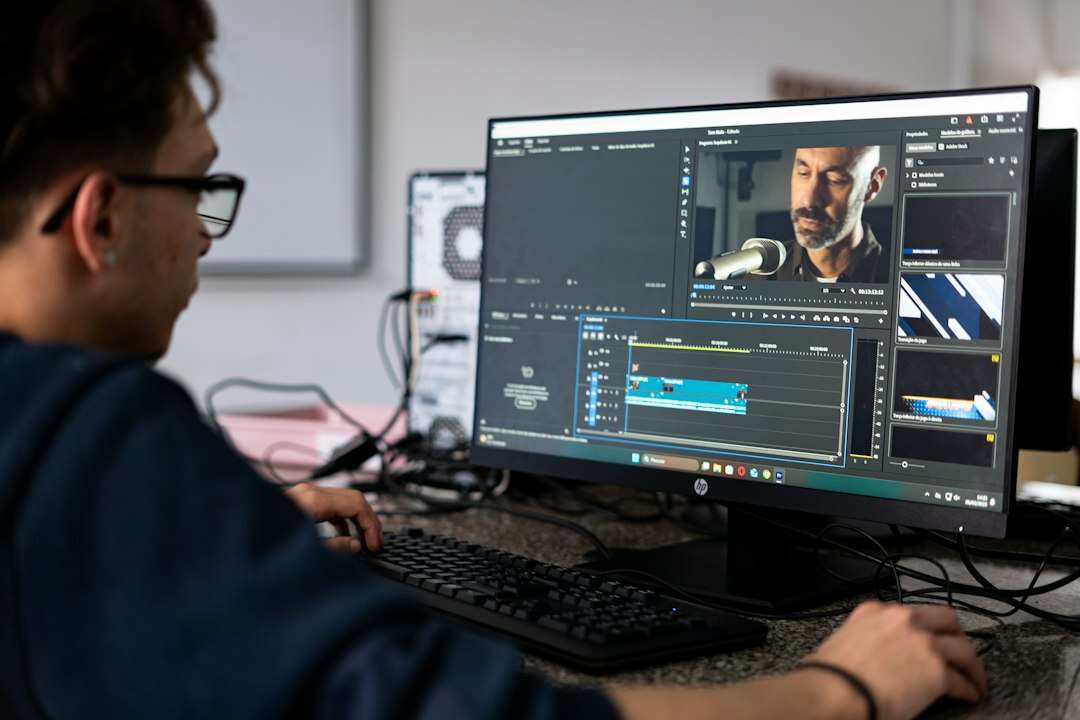
A video editor turns raw footage into finished video: webinars, customer stories, product demos and short clips for social, with sound, captions and color done properly. Reels are easy to polish, so we screen for speed on real footage, how they cut for a business audience, and a steady output across months.

US base, typical
$51,316 to $65,121
Reports to
Creative director
Ramp
A steady output by day 90
Video editor cutting an interview on a timeline at a desktop workstation
  • 90days of ramp, each milestone tested before you meet a candidate
  • 15%of first-year base, paid only once your hire starts
  • 10working days from a signed brief to your shortlist
  • $0upfront: no retainer, no exclusivity, no monthly minimum

What a good video editor has done by day 90

Recorded footage is only worth something once it is cut and published. Each stage below has a signal that predicts it, and we test for that signal before you meet anyone.

The ramp, and the test behind each milestone

Milestone 1 of 5: Clears the backlog

Week 1

The webinars, interviews and demos that sat unedited. Learns the brand's titles, colors, music rules and caption style, and ships the first finished cuts from footage already recorded.

On track looks like finished videos from the backlog live in the first week, on brand.

How we test for it before you meet them

A short edit exercise in our screen: twenty minutes of real interview footage, cut to a two-minute story. We score the story and the pace, not effects.

Milestone 2 of 5: A workflow that keeps up

Weeks 2 to 4

Project templates, a media library, naming and review steps, so a webinar becomes a full edit and a set of clips within days rather than weeks.

On track looks like a predictable turnaround from recording to published video and clips.

How we test for it before you meet them

We ask how they organized footage and reviews at their last job, and how long a typical webinar took from recording to clips. A former manager confirms it.

Milestone 3 of 5: Clips for every channel

Weeks 5 to 8

Each long video cut into short clips sized and captioned for LinkedIn, YouTube and the website, with hooks in the first seconds and captions that work with the sound off.

On track looks like a regular flow of short clips going out every week from each long recording.

How we test for it before you meet them

We look at short clips they cut from long footage and ask which ones performed. Editors who know their numbers cut differently.

Milestone 4 of 5: Stories that sell

Weeks 9 to 13

Customer stories and product demos edited for buyers: a clear problem, the proof, the outcome, with b-roll, graphics and sound that make it feel finished.

On track looks like a customer story or demo the sales team uses in deals.

How we test for it before you meet them

A reference call about one story they edited: how many rounds it took, how they handled feedback from people who were not video experts, and whether it shipped on time.

Milestone 5 of 5: Shaping what gets filmed

After day 90

Strong editors start influencing shoots and recordings: shot lists, interview questions, lighting and sound, so footage arrives easier to edit and better to watch.

On track looks like shot lists and recording guidance the team follows before filming.

How we test for it before you meet them

We ask what they would change about how your team records. A practical answer predicts the editor who improves the footage, not just the cut.

What the seat owns

Five responsibilities. If the seat is mainly animation and motion graphics, it is a motion designer; if it plans and runs shoots, it is a producer.

  1. Finished long-form video

    Webinars, interviews, customer stories and product demos cut into clear, well-paced videos.

  2. Short clips for each channel

    Clips cut from long recordings, sized and captioned for each platform and the website.

  3. Sound, captions and color

    Clean audio, accurate captions and consistent color, so every video feels finished.

  4. Brand applied in video

    Titles, lower thirds, music and end cards used the same way across every video.

  5. A library and workflow

    Footage organized, project templates and a review routine that keeps output steady.

What it is not

Three neighboring seats absorb work people assume belongs here. Drawing the line wrong is how a video hire ends up animating explainers or producing shoots alone.

  • Motion Designer

    That seat ownsMotion graphics, animated explainers and animated moments for ads, launches and the website.

    Hire it instead whenthe videos you need are mostly animation rather than recorded footage.

  • Creative Producer

    That seat ownsGetting work made: scopes, schedules, budgets, vendors and shoots.

    Hire it instead whenthe problem is planning and running shoots, not editing what is already filmed.

  • Social Content Creator

    That seat ownsNative posts for each platform, often filmed and edited on a phone by the same person.

    Hire it instead whenyou need fast, native social content more than finished long-form video.

Three versions of the seat

The title stays the same; the footage does not. Pick the one that matches your recordings.

Turns webinars, podcasts and interviews into full edits and a steady stream of clips.

What they optimize
Turnaround and clips per recording
Strongest background
In-house content video or podcast editing at volume
Watch for
Cinematic reels with no sign of volume work
Works well with
A content lead who records every week

Edits customer stories, launch films and brand pieces where craft and story matter most.

What they optimize
Story, pace and a finished feel
Strongest background
Documentary-style or brand video for companies or agencies
Watch for
Slow turnaround on everyday edits
Works well with
A creative director and a producer who plans shoots

Cuts short, native video for LinkedIn, YouTube Shorts and other platforms, often daily.

What they optimize
Hooks, retention and posting frequency
Strongest background
Short-form editing with view and retention numbers to show
Watch for
Consumer trends that do not suit a business audience
Works well with
A social media manager who owns the calendar

Six interview questions that separate video editors

The questions we ask in our own screen. Use them in yours; the warning signs are as useful as the answers.

The scorecard every video editor is scored against

Every candidate we put forward is scored on these five, and the scores travel with the shortlist, gaps included. Four out of five with a named weakness beats a clean sweep you cannot verify.

What we scoreWeak evidenceStrong evidence
Story and pace on real footageA polished reel and a timed exercise that loses the story.A clear two-minute story from our raw footage, in the time given.
Turnaround at volumeMonths on single pieces with no sense of volume.States weekly output and turnaround, confirmed by a former manager.
Sound, captions and colorUneven audio and missing captions.Clean sound, accurate captions and consistent color across their work.
Editing for a business audienceConsumer trends that would not suit your buyers.Customer stories or demos that sales teams used.
Organization and workflowNo system for footage or reviews.A library, templates and a review routine they set up.

What a video editor is paid in the US

Public US benchmarks, read October 2026. Salary.com’s employer-reported band is the closest match for a company video editor. The BLS band runs much higher at the upper end because the occupation also covers film and television editing.

Each bar runs from the 25th to the 75th percentile, the middle half of reported pay.

Base salaryWages including commission (BLS)

  • Video Editor

    Salary.com base benchmark

    $51,316 to $65,121 base

  • Film and video editors

    BLS, all industries

    $52,720 to $105,310

  • Graphic Designer

    Salary.com base benchmark, neighboring seat

    $65,274 to $77,343 base

  • Motion designers and animators

    BLS special effects artists and animators

    $75,490 to $139,130

Video Editor and Graphic Designer: Salary.com base salary, 25th to 75th percentile, United States, as of October 1, 2026. Film and video editors, and special effects artists and animators: U.S. Bureau of Labor Statistics, Occupational Employment and Wage Statistics, May 2025, annual wage at the 25th and 75th percentiles (SOC 27-4032 and 27-1014), all industries. Public aggregates, not ZaphyrRecruit placement data.

Employer questions about hiring a video editor

A video editor cuts raw footage into finished video. In a B2B marketing team that means webinars, interviews, customer stories and product demos edited into clear, well-paced videos, plus short clips for LinkedIn, YouTube and the website. The job includes sound, captions, color and brand titles, and a workflow that turns each recording into published video within days rather than weeks.

Salary.com puts a video editor at $51,316 to $65,121 base, with a median of $60,235 (October 2026). The BLS band for film and video editors runs from $52,720 to $105,310 across all industries, higher at the upper end because it includes film and television work. Editors who also shoot, animate or lead a video program usually command more than a pure editing seat.

A freelancer suits occasional projects with clear briefs. An in-house video editor pays off once you record every week: webinars, interviews, demos and social clips. They learn the product and the brand, turn footage around in days, and build templates that keep every video consistent. Many teams keep one editor in-house and add freelancers for peaks. We recruit the in-house seat.

Work like yours. Look for business video, not just music videos or film trailers: customer stories, demos, interviews and short clips cut from long recordings. Ask for one project with the raw footage and the first cut beside the final version. It shows story judgment and speed, which a polished reel built over months can hide.

Most work in Adobe Premiere Pro or DaVinci Resolve, often with After Effects for titles and simple motion, and Audition or similar tools for sound. Final Cut Pro is common on Mac teams. Tools are learnable in weeks; story judgment, pace and a steady output across months are not, so we weigh those more heavily than the software list on a CV.

A video editor works mainly with recorded footage: interviews, webinars, demos and b-roll, cut into a story. A motion designer creates animation and motion graphics, often from nothing: explainers, animated ads and product moments. Many editors handle simple titles and graphics, and many motion designers can edit, but if most of your video is animation, hire a motion designer.

Ten working days from a signed brief to a shortlist of three to five calibrated editors, each with a reel review and our timed edit exercise scored. Interview speed decides the rest: good editors rarely run one process at a time, so a decision within a week of the first interview keeps them. Most can start two to four weeks after accepting.

Brief us on this seat

Tell us what you record, how often, and where the videos go. We come back within one business day with how we would run the search and what the seat pays.


If you are a video editor reading this

We build shortlists from people doing this work now, often before a seat is advertised. Set up a job alert for creative roles, or send your CV and reel link and we will come to you when a seat opens.

Scroll to Top